Most software is almost right, but not quite.
You’ve already got software that handles most of your day. This is for the part it doesn’t handle: the spreadsheet workaround, the manual step, the thing you’ve been meaning to fix for two years.
Software from big platforms isn’t bad. It’s built for ten million people who do roughly what you do, and most days that’s close enough. But the more your day depends on the five things you do every time, in a specific order, the more the gap between “fine” and “fits your business” costs you. An hour a week. A workaround that breaks every update. Friction you’ve stopped noticing because you’ve adapted around it.
Big platforms can’t close that gap, and not because they’re badly run. Their roadmap is shaped by what makes the next ten thousand customers happy, not the one customer named you. That’s structural. It’s the price of a tool built to serve everyone.
Until recently that was the end of the story. The people who knew exactly how the work should feel couldn’t build the software they wanted, so they made do and kept a spreadsheet on the side. That’s no longer true. The same AI tools the big platforms bolt onto your dashboard now let the people who do the work build the focused tools they always wished existed.
A different shape of software.
There’s another kind of software. Focused. Built much closer to the people who do the work.
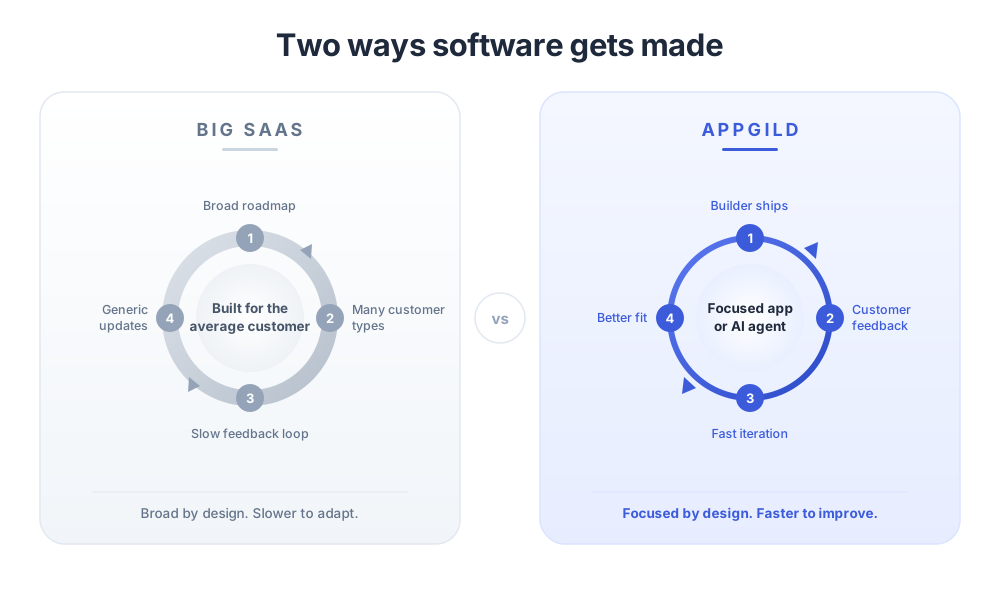
Often it comes from someone who got tired of doing the same task by hand for the fortieth time and built the version they wished existed. They’re rarely venture-backed. They almost never have marketing teams. You’ve probably never heard their names.
When you find one that matches your work, you feel it within minutes. The defaults already reflect how you actually work. The button labels are your words, not the corporate translation of them. The thing you’d have filed a feature request for three years ago just exists.
This is what AppGild is for.
Some of these are agents that do the work for you.
A calculator waits for you. An agent doesn’t. The newest listings here take a task from start to finish: sort the inbox, draft the reply, pull the numbers together, then hand you the result instead of a blank form. For a small team that’s not a nicer tool. It’s an extra pair of hands for the work you never get to.
We’re deliberate about how we show them. Every agent listing says up front that it’s AI, which model it runs on, what it can do and touch, and where it falls short. Agents are clear about whether they only suggest, ask before acting, or act on their own, and the important calls remain yours to confirm.
Treat a good agent like a sharp new hire: give it the work it’s suited for, check what matters before it goes out the door, and let it carry the rest.
This is not where you replace your whole stack.
Most readers should not rip out the software they already use. Your project tracker still tracks projects. Your accounting software still does the books. AppGild is for the place where your stack stops short: the one stubborn part of the day that lives in a spreadsheet, or in your head, or in a workaround that’s officially temporary and three years old.
The wedding photographer’s contract generator that knows about usage rights. The dental front-office tool that knows insurance verification. The bookkeeper’s month-end cleanup tool that knows what “final-final-new” really means. These apps sit next to the big platforms. They don’t compete with them.
If your big platforms are working, keep them. This is a question of what fits in the gap.
Why focused tools usually win the gap.
They use your vocabulary. A general project tracker calls them “tickets.” A wedding planner’s calls them “weddings.” The right words make the tool disappear into the work.
They can hold an opinion about defaults. General software stays neutral because everyone uses it differently. A specialist tool can pick a strong default and be right for nine out of ten people in its niche, instead of neutral and useful for nobody.
They’re focused enough to learn in an afternoon. No certification courses, no rollout consultants. You open it, you do the thing, you close it.
They can ship a fix in days. When a focused builder hears the same missing thing from ten people in a week, version 2 can ship the next week. A big platform schedules it for a quarterly roadmap, if it ever makes the cut. That speed is the structural advantage of buying close to the builder.
None of these are guaranteed for any specific app. The five-person tool could be brittle; the giant can sometimes nail your niche. But the shape of the bet is different, and when you’ve done a specific kind of work for years, specialist usually beats generalist in the gap.
What we can promise, and what we cannot.
Buying focused software from someone you’ve never heard of should raise honest questions. Does it fit? Who built it? Where does your data go? What if it doesn’t work out?
We can’t promise every app will fit your exact workflow. No marketplace can honestly promise that. What we can promise is a bet that’s easy to judge and easy to step away from:
Listing details. When a builder includes them, they cover who built it, what it does and doesn’t do, where your data goes, and what you keep if you stop subscribing. The most useful section is the “what you don’t get in v1” list. If your must-have is on that list, this isn’t your app, and the builder told you upfront.
Easy cancellation. Most listings are monthly or annual subscriptions. If a tool isn’t earning its place, cancel from your purchases page and access ends at the close of the period.
14-day money-back guarantee. If the app isn’t what was described, you’re protected.
How to shop here.
Start with the task that still annoys you. Not “better operations,” the specific thing: the proposal you keep rewriting, the intake step that creates mistakes, the spreadsheet only one person understands.
Then read the listing for limits, not just benefits. The most honest line on any software page is usually the one that says what version one does not do. Put the app to work on the workflow you actually need to fix. When it works, it solves your problem and pays an independent builder who solved it because they’ve lived it too.
For a longer practical guide, see How to Shop on AppGild.
Who this is for.
Small-business owners and operators running a real business whose workflow doesn’t quite fit the big platforms. You’re not looking for a suite replacement. You’re looking for the one missing piece.
Solo professionals and practitioners who are the business. Photographers, accountants, attorneys, coaches, contractors, bookkeepers: people whose day depends on a workflow they’ve built and patched for years. Your Excel sheet is the company.
You don’t need to know anything about software development to shop here. You just need to know what your work actually looks like, and be willing to spend a few minutes reading a listing instead of skimming a star rating.
If that’s you, the rest is just buttons.
And if you want the longer story of how businesses like yours are finding these tools now, the blog has it: how small businesses actually find niche software, from problem-based searches to AI assistants that shortlist tools for one specific job.